Check My Latest Blog Posts
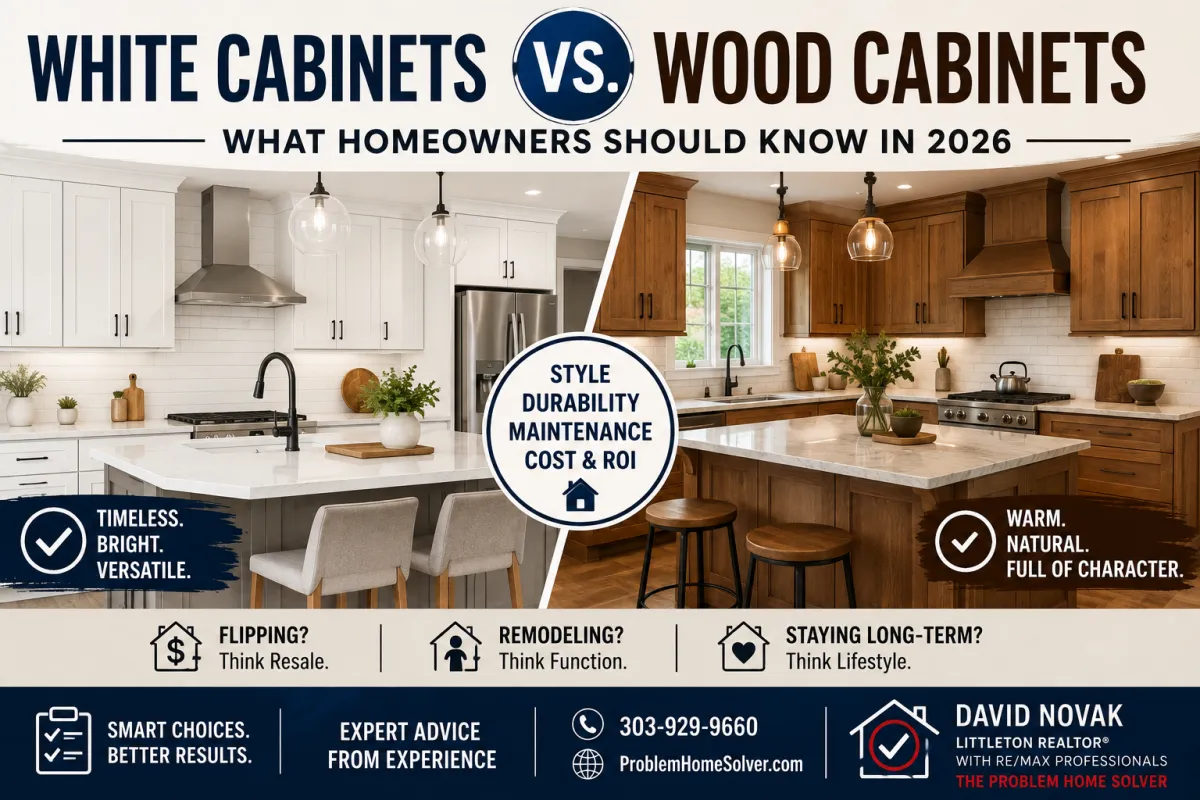
White Cabinets vs. Wood Cabinets: What Homeowners Should Know in 2026
Updated August 2026
Are white kitchen cabinets officially out of style?
Not so fast.
White cabinets have been everywhere for years, and I understand why some homeowners are tired of seeing them. But there is a difference between a trend becoming less dominant and a design choice becoming obsolete.
White cabinets are still one of the safest and most versatile kitchen choices, especially when resale is part of the decision.
At the same time, natural wood cabinetry has made a strong comeback because homeowners are looking for more warmth, texture, and personality in their kitchens.
So which is better?
The answer depends on your home, budget, timeline, and whether you're remodeling for yourself, preparing to sell, renovating a rental, or flipping a property.
Are White Cabinets Still in Style in 2026?
Yes.
White cabinetry may no longer feel as fresh or unique as it did several years ago, but that doesn't make it outdated.
White is neutral, adaptable, and easy to coordinate with almost any countertop, backsplash, flooring, hardware, or paint color.
That flexibility is one reason I still use white cabinets on some renovation projects.
They can also make a smaller kitchen feel brighter and more open, especially if the room doesn't have much natural light.
From a resale perspective, white cabinets tend to be a relatively safe choice because buyers can easily picture their own style around them.
Why Some Homeowners Are Tired of White Kitchens
The biggest issue with white cabinetry isn't necessarily that it looks bad.
It is that people have seen so much of it.
After years of white shaker cabinets, white quartz, subway tile, and gray flooring, some buyers are looking for something warmer and more distinctive.
There are practical drawbacks too.
White cabinets show fingerprints, smudges, spills, pet marks, and grime much more easily than medium-tone wood.
They can also feel cold or sterile if the kitchen doesn't have enough warmth elsewhere.
If you choose white cabinets, I like balancing them with warmer elements such as natural wood flooring, warm metal hardware, textured backsplash tile, or countertops with movement.
When White Cabinets Make the Most Sense
White cabinetry is particularly useful in certain situations.
If the kitchen is small, dark, or enclosed, lighter cabinetry can make the room feel larger.
If you're flipping a home, preparing to sell, or renovating a rental, white shaker cabinets can still be a practical option because they are widely available and generally appeal to a broad range of buyers.
They are also easier to coordinate with other finishes.
That matters when you're renovating for resale because the goal is usually to create a cohesive kitchen without overspending.
Why Natural Wood Cabinets Are Gaining Popularity
Wood cabinets bring something white cabinets can't completely replicate.
Warmth.
Natural grain adds texture and visual depth, and each species has a different personality.
Wood cabinetry can work in everything from traditional kitchens to modern and mid-century interiors.
It also tends to hide fingerprints and minor wear better than bright white finishes.
The tradeoff is cost.
High-quality wood cabinets can become significantly more expensive than basic painted cabinets, especially when you move into semi-custom or custom construction.
That is where your objective matters.
If you're renovating your forever home, spending more may make sense.
If you're flipping a modestly priced property, the additional cost may not produce an equivalent resale return.
Oak Cabinets
Oak has been used in kitchens for decades.
And despite what some homeowners assume, oak isn't automatically outdated.
The key is the finish.
Traditional orange-toned oak can make a kitchen feel dated, but lighter natural oak and white oak can work extremely well in modern and transitional designs.
Oak also has a prominent grain pattern, so it adds visual texture.
It is durable and generally more budget-friendly than some premium hardwoods.
For homeowners who want a natural wood look without moving into extremely expensive cabinetry, oak can be worth considering.
Maple Cabinets
Maple has a smoother and more consistent grain than oak.
That makes it a good choice for homeowners who want natural wood without a heavily rustic appearance.
Maple can be stained in lighter or darker finishes and works well in modern, transitional, and traditional kitchens.
It is also known for durability.
If you're comparing wood options for a renovation intended to last many years, maple is one of the more practical choices.
Cherry Cabinets
Cherry has a richer, warmer tone and tends to darken naturally over time.
Some people associate cherry with older kitchens, but that doesn't mean the material itself is outdated.
Modern hardware, countertops, backsplash, and flooring can completely change how cherry cabinetry looks.
The bigger issue for resale is cost and style specificity.
Cherry tends to be a more distinctive choice, which may not appeal to as broad a buyer pool as white or lighter wood.
For a long-term personal renovation, it can be beautiful.
For a quick resale project, I would usually consider something more neutral and cost-conscious.
Walnut Cabinets
Walnut is a premium material.
Its deep brown tones and distinctive grain can make a kitchen look sophisticated and high-end.
But premium materials come with premium costs.
Walnut can also be somewhat softer than other hardwoods and may show scratches more easily.
That makes it another example of a cabinet that can be perfect for a custom home but difficult to justify purely from a resale ROI standpoint in a modestly priced property.
Hickory Cabinets
Hickory has one of the most dramatic natural grain patterns.
You'll often see strong variations between light and dark sections of the wood.
That makes it a good fit for rustic, mountain, western, and certain mid-century-inspired homes.
It is also extremely durable.
The tradeoff is that hickory has a strong visual personality.
If you're renovating for yourself and love the look, that can be an advantage.
If you're preparing to sell, however, a highly distinctive cabinet choice may narrow the number of buyers who immediately connect with the kitchen.
Knotty Alder Cabinets
Knotty alder can create a fantastic mountain or lodge feel.
I used it in a spec home years ago where the architecture already had a mountain style, and the cabinets worked beautifully with the rest of the finishes.
But alder is softer than oak or maple.
It can scratch and dent more easily and requires more care.
It also has a very specific look.
For the right home, that style can be perfect.
For a generic resale renovation, it may not be the safest financial choice.
Which Cabinet Is Better for Resale?
If resale is your main objective, I usually prefer broadly appealing finishes rather than highly personalized ones.
White shaker cabinets remain one of the safer options because they work with so many design styles.
Light natural woods are another strong choice, particularly as warmer interiors continue to gain popularity.
You can also combine the two.
For example, some kitchens use white upper cabinets with wood lower cabinets or a natural wood island.
That can create warmth without making the entire kitchen feel dark.
It also gives you a way to move beyond the all-white look without taking on the cost of a completely custom wood kitchen.
Consider the Size of Your Kitchen
Kitchen size should influence cabinet color.
A smaller kitchen with limited natural light can feel cramped with dark cabinetry.
White or lighter wood cabinets may help it feel more open.
A large kitchen with abundant windows and lighting gives you more flexibility.
Darker wood can add warmth and prevent a large space from feeling too stark.
There is no single right answer.
You have to look at the room as a whole.
Don't Forget Maintenance
Every cabinet material requires maintenance.
White cabinets show dirt more quickly.
Wood cabinets can scratch, fade, or need refinishing depending on the finish and species.
Painted cabinets can chip.
Soft woods can dent.
High-gloss finishes may show fingerprints.
Before choosing a cabinet based only on appearance, think about how your household actually uses the kitchen.
Kids, pets, cooking habits, and cleaning routines should all factor into the decision.
What I See in Littleton and the Denver Metro Area
In Littleton and throughout the Denver metro area, we have a huge variety of housing styles.
That includes older ranch homes, split-levels, tri-levels, newer construction, mountain-inspired homes, and remodeled properties from nearly every decade.
A cabinet style that works perfectly in one home may look completely out of place in another.
For example, a warm natural oak kitchen may fit beautifully in a mid-century ranch.
A clean white shaker kitchen may make more sense in a small 1970s home that needs more light.
And a high-end walnut kitchen may be appropriate in a luxury property but difficult to justify in a modestly priced neighborhood.
I always come back to the same principle:
Match the renovation to the house.
Cabinet Mistakes to Avoid
One of the biggest mistakes is choosing cabinets based solely on what is trending online.
Another is overspending on cabinetry when the neighborhood doesn't support the investment.
Homeowners also get into trouble when they select a finish without thinking about the rest of the kitchen.
Cabinets, countertops, flooring, backsplash, lighting, and hardware all need to work together.
You should also think about longevity.
A highly fashionable cabinet style may look great today but could become more difficult to work with later.
That doesn't mean you should avoid trends completely.
It means you should balance them with classic elements.
My Advice Based on Renovating and Selling Homes
I have renovated rentals, flipped homes, and helped sellers prepare properties for the market.
When resale is the objective, I generally choose cabinetry that appeals to the broadest range of buyers without unnecessarily increasing the budget.
That is why white shaker cabinets still have a place.
They aren't exciting to everyone, but they are flexible.
Natural wood is also an excellent option when the budget and property support it.
What I would avoid is spending significantly more on premium cabinetry just because you assume buyers will reimburse you for it.
They may appreciate it.
That doesn't mean they will pay you back dollar-for-dollar.
Quick Takeaway
White cabinets are not dead.
Wood cabinets are not automatically better.
The best choice depends on:
Your renovation budget
How long you plan to own the home
The size and natural light in the kitchen
Your preferred design style
Maintenance expectations
The value range of the property
Whether you're remodeling for yourself or resale
For sellers and investors, broad appeal usually matters more than making the kitchen completely unique.
For homeowners staying long term, personal preference deserves much more weight.
Thinking About Remodeling or Selling a Home in Littleton?
If you're considering replacing your kitchen cabinets before selling, it can be worth looking at the entire property before spending the money.
Sometimes replacing the cabinets makes sense.
Other times painting, refacing, changing hardware, updating countertops, or improving lighting may provide a better balance between cost and presentation.
I'm David Novak, a Littleton Realtor with RE/MAX Professionals, known as the Problem Home Solver. I work with homeowners, buyers, and investors throughout Littleton and the surrounding Denver metro area, including properties that need updating or significant renovation.
If you're trying to decide what to improve before selling, I'm happy to help.
Call or text: 303-929-9660
Visit: ProblemHomeSolver.com

Are you tired of feeling like you can't trust real estate agents?
You’re not alone—and that’s exactly why I do things differently. With 30+ years in real estate, from running a mortgage bank to flipping homes and helping hundreds of families buy and sell, I’ve seen the good, the bad, and the downright ugly. My job isn’t to “sell” you—it’s to guide you with straight answers, real numbers, and options that actually make sense for your situation.
And if you’re not in my area, no problem—I can connect you with a top, experienced agent you can trust in your market.
👉 Fill out the form on my contact page or reach out directly, and let’s talk about how I can help you make the right move without the games.
Facebook
Instagram
X
LinkedIn
Youtube
Website