Check My Latest Blog Posts
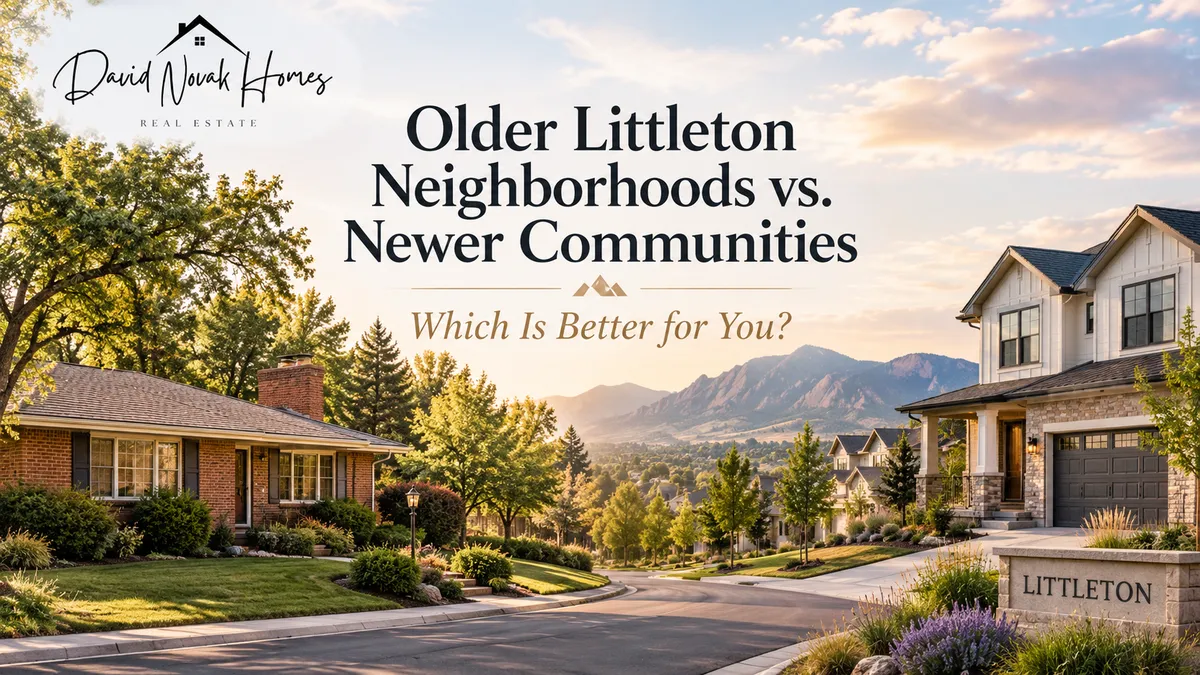
Older Littleton Neighborhoods vs. Newer Communities: Which Is Better for You?
If you're considering moving to Littleton, Colorado, one of the biggest decisions isn't simply whether you want to live in Littleton.
It's what kind of Littleton you want.
You can find older established neighborhoods with mature trees, larger lots, unique architecture, and homes that have changed considerably over the decades.
You can also find newer communities with modern floor plans, newer mechanical systems, neighborhood amenities, and considerably less immediate updating.
Neither is automatically better.
But they offer very different experiences.
As a Littleton Realtor who's spent decades working with homes throughout southwest Denver—and as someone who buys, renovates, owns, and sells older properties myself—I think buyers need to understand those differences before deciding where they want to live.
For the bigger picture, including the overall advantages and drawbacks of the area, read my main guide:
Pros and Cons of Living in Littleton, Colorado
Now let's look specifically at older Littleton versus newer Littleton.
What Do I Mean by an "Older Littleton Neighborhood"?
When I talk about older Littleton, I'm generally talking about neighborhoods where many of the homes were built several decades ago rather than within the latest wave of development.
These homes can include:
Mid-century ranches
Brick ranches
Split-levels
Tri-levels
Bi-levels
Traditional two-story homes
Homes that have been added onto or remodeled over time
And that's part of what makes them interesting.
You can walk down one street and see five houses that may have started with nearly identical floor plans but look completely different today.
One owner added a family room.
Another finished the basement.
Another opened the kitchen.
Another preserved nearly everything.
Another completely modernized the house.
That kind of variety is much harder to find in brand-new construction.
The Biggest Advantage of Older Littleton: The Neighborhood Is Already There
One thing you can't renovate into a house is time.
Older neighborhoods have simply had decades to mature.
Trees are larger.
Landscaping is established.
Streets often feel different.
Homes may sit farther apart.
And the neighborhood's character is already apparent.
When you're buying into a brand-new development, you're buying into what the neighborhood is supposed to become.
When you're buying into an established neighborhood, you can already see much of what it is.
That's a significant difference.
Mature Trees Are Hard to Duplicate
This sounds like a small thing until you compare neighborhoods side by side.
A 40-, 50-, or 60-year-old tree changes a property.
It gives shade.
Privacy.
Character.
And a sense that the home has been part of the neighborhood for a long time.
New communities can have beautiful landscaping, but you simply can't manufacture maturity overnight.
If large trees and established yards matter to you, older Littleton deserves serious consideration.
Older Homes Can Have Larger Lots
This isn't universal, but it's something buyers should look at.
Some established neighborhoods provide more separation between houses and larger usable yards than newer developments where maximizing density becomes more important.
If you're someone who wants:
A big backyard.
Room for a dog.
Gardening space.
A detached garage.
A workshop.
RV storage where permitted.
Or simply more distance from your neighbor.
An older property may give you options that are harder to find in newer construction.
But don't assume that automatically.
Lot size varies dramatically throughout the Littleton area.
Older Homes Often Have More Character
This is probably one of my favorite parts.
I spend a lot of time looking at older houses, and I enjoy homes that still retain some of their original personality.
Original hardwood floors.
Brick fireplaces.
Built-ins.
Real wood doors.
Interesting trim.
Mid-century details.
Older tile that somehow still works.
Even some completely untouched time-capsule houses can be pretty incredible.
The challenge is figuring out which character is worth preserving and which parts genuinely need updating.
You don't necessarily need to erase an older home's history to make it comfortable.
In fact, I think some renovations go too far and remove exactly what made the home interesting.
But Older Homes Can Come With Older Problems
This is the other side of the equation.
A beautiful mature neighborhood does not mean the house itself is maintenance-free.
Depending on the age and property, buyers may encounter older:
Sewer lines
Electrical systems
Plumbing
Windows
Furnaces
Air-conditioning systems
Roofs
Insulation
Drainage systems
Foundations
That doesn't mean you should avoid older houses.
I've bought plenty of them.
It means you need to understand what you're buying.
I've said this many times with older homes:
The inspection and due diligence matter.
A 50-year-old home shouldn't necessarily scare you.
But pretending it's a five-year-old house can get expensive.
Sewer Lines Matter in Older Littleton Homes
This is one item I pay particular attention to.
If I'm helping someone buy an older property, a sewer scope is usually something I want to discuss.
Older sewer lines can have:
Root intrusion.
Cracking.
Offsets.
Deterioration.
Or older materials that deserve closer evaluation.
A normal home inspection doesn't tell you everything happening underground.
That's why older homes require a slightly different mindset than buying something newly built.
You're not simply asking:
Does the house look good?
You're asking:
How has this house aged?
Older Electrical Systems Deserve Attention
The same applies to electrical systems.
An older home may have been updated several times.
Maybe the panel is newer.
Maybe portions of the wiring have been replaced.
Maybe additions were completed decades apart.
That's why I'm cautious when someone walks into an older house and assumes everything is original—or everything is updated.
You need to evaluate the actual property.
Not the year printed on the listing.
What About Foundations?
Colorado buyers naturally worry about foundation problems.
And with older homes, you may see cracks.
Not every crack means the house is falling apart.
Some are cosmetic.
Some deserve additional investigation.
Drainage, grading, soil conditions, movement history, and previous repairs all matter.
This is where an experienced inspector—and sometimes a structural engineer—can become very important.
I would rather investigate something than either panic unnecessarily or ignore it.
The Big Advantage of Newer Homes: Fewer Immediate Projects
Now let's look at the other side.
For many buyers, the appeal of a newer home is simple:
They don't want another project.
I understand that.
A newer property may have:
Newer roofing.
Modern electrical.
Modern plumbing.
Better insulation.
More efficient windows.
Newer HVAC.
Contemporary kitchens.
Newer bathrooms.
And less deferred maintenance.
That can be extremely appealing to buyers who don't want to spend the next five years updating their house.
Modern Floor Plans Are a Big Attraction
Older floor plans aren't for everyone.
Some older homes have:
Smaller kitchens.
Separate dining rooms.
Smaller primary bedrooms.
Limited closets.
One main bathroom.
Lower basement ceilings.
Smaller garages.
Newer construction often addresses those issues.
Today's buyers frequently expect:
Large kitchen islands.
Primary suites.
Walk-in closets.
Larger bathrooms.
Open kitchens.
More electrical outlets.
Home offices.
Bigger garages.
And more built-in storage.
If those things are high on your list, newer construction may fit you much better.
Don't Assume Open Floor Plans Are Automatically Better
This is where personal preference comes into play.
For quite a while, every renovation seemed focused on removing walls.
Open the kitchen.
Open the dining room.
Open the living room.
Make everything one giant space.
That works for some people.
But I'm seeing plenty of homeowners rediscover the benefits of having some separation.
Noise control.
Privacy.
Different activities happening simultaneously.
A place to work.
A room where somebody can watch television without hearing the kitchen.
Older homes sometimes provide those defined spaces naturally.
Again, it's not better or worse.
It's about how you actually live.
Newer Homes May Have Smaller Lots
This can be the tradeoff.
You may get:
A larger house.
A bigger kitchen.
A better primary suite.
And newer construction.
But sometimes on a smaller lot with homes located closer together.
For buyers who spend most of their time indoors, that's perfectly fine.
For someone who wants a huge backyard, mature landscaping, and privacy, it may not be.
The house itself is only part of the purchase.
You're buying the lot and neighborhood too.
HOAs Can Be More Common in Newer Communities
Another thing buyers need to consider is the neighborhood structure.
Newer communities frequently have homeowner associations and community standards.
Some buyers love this.
They appreciate maintained common areas, architectural standards, neighborhood amenities, and rules designed to keep properties consistent.
Other buyers hate being told what color they can paint something or where they can park.
Neither position is wrong.
You just need to know which type of homeowner you are before you buy.
Amenities Can Favor Newer Communities
Some newer neighborhoods are intentionally designed around amenities.
That can include:
Trails.
Parks.
Community gathering areas.
Pools.
Recreation facilities.
Organized neighborhood events.
For families and active homeowners, that can be a major attraction.
Older neighborhoods may have excellent access to parks and trails too, but the community itself wasn't necessarily designed around a master amenity package.
This comes back to lifestyle.
Older Littleton Can Feel More Individual
One thing I personally like about established areas is that everything doesn't look the same.
You may see:
Different exterior colors.
Different additions.
Different landscaping.
Different architecture.
Different garages.
Different levels of renovation.
Some people love that.
Other buyers prefer the visual consistency of a newer community.
This is one of those things you can't fully understand from listing photos.
Drive the neighborhood.
Walk it.
Visit at different times of day.
That's when you start figuring out whether it feels right.
New Doesn't Mean Maintenance-Free
This is something I think buyers need to hear.
A newer home can reduce your immediate maintenance exposure.
It does not mean nothing can go wrong.
I've dealt with newer homes with:
Drainage issues.
Construction defects.
Roof problems.
HVAC problems.
Improper installation.
Concrete movement.
Window issues.
And unfinished warranty items.
New construction should still be inspected.
I don't care if nobody has ever lived there.
A house is built by humans.
Things get missed.
Older Doesn't Automatically Mean a Money Pit
The reverse is also true.
I've walked through 50-year-old homes that were maintained beautifully.
Major systems had already been replaced.
The roof was newer.
Sewer had been addressed.
Electrical had been upgraded.
Windows were newer.
And the home was in fantastic condition.
Then I've seen much newer houses where virtually nothing had been maintained.
Age gives you clues. Condition tells you more.
That's why I don't like eliminating homes solely based on year built.
Renovated Older Homes Can Offer the Best of Both Worlds
This is where things get interesting.
A properly renovated older home can give you:
An established neighborhood.
Mature trees.
A larger lot.
Older-home character.
Plus:
Updated electrical.
Updated plumbing.
Newer windows.
Modern flooring.
A remodeled kitchen.
Updated bathrooms.
New HVAC.
And improved energy efficiency.
Those homes can be extremely attractive.
But buyers need to distinguish between a good renovation and a cosmetic flip.
Those aren't always the same thing.
Look Beyond the New Countertops
This is where my investor background comes into play.
When I walk into a remodeled older home, I'm not only looking at the pretty finishes.
I want to know:
Was the sewer addressed?
What happened with the electrical?
How old is the furnace?
What's happening with drainage?
What kind of windows were installed?
Were permits required?
How was the bathroom waterproofed?
Did someone improve the house—or simply make it photograph well?
New flooring and quartz countertops are easy to see.
The expensive stuff is often hidden.
Which Is Better for Resale?
There isn't a universal winner.
A desirable established neighborhood can remain extremely attractive because buyers value location, lot size, character, schools, parks, convenience, and mature landscaping.
Newer communities can remain attractive because buyers value modern design, energy efficiency, neighborhood amenities, and lower immediate maintenance.
Your future resale depends on more than the age of the house.
It depends on:
Location.
Condition.
Lot.
Floor plan.
Updates.
Neighborhood.
Price.
And what buyers are looking for when you eventually sell.
What About Downsizing?
This is an interesting consideration for buyers later in life.
Some homeowners assume downsizing means buying something newer.
Sometimes it does.
But not always.
Someone may prefer a smaller older ranch because it provides:
Single-level living.
An established neighborhood.
A yard.
A two-car garage.
And no giant house to maintain.
Another buyer may prefer a newer low-maintenance community because they don't want exterior projects or renovation surprises.
If you're downsizing, I would start with how you want to live, not simply how many square feet you want.
What About Families?
Families may care more about:
Bedrooms.
Bathrooms.
Schools.
Yard size.
Parks.
Storage.
Garage space.
And neighborhood layout.
An older home may give you a fantastic lot but fewer bathrooms.
A newer home may give you five bedrooms and four bathrooms but less yard.
Again, you're balancing tradeoffs.
Very few houses give you everything.
What I Tell Buyers Moving to Littleton
Don't decide you want "new" or "old" before you've actually looked at both.
I've had buyers convinced they wanted newer construction until they walked through an established neighborhood they loved.
And I've had buyers romanticize older homes until they realized they absolutely did not want renovation projects.
That's why I think seeing both is useful.
You learn quickly what actually matters to you.
Questions I'd Ask Before Choosing
Before deciding between older Littleton and a newer community, ask yourself:
Do I want projects?
If the answer is absolutely not, newer may deserve more attention.
Do I value mature landscaping and larger lots?
Older neighborhoods may have an advantage.
How important is a modern floor plan?
If you need a huge kitchen and primary suite, newer construction may fit more naturally.
Do I want an HOA?
Some buyers do. Some absolutely don't.
How important are community amenities?
This can heavily favor certain newer neighborhoods.
Do I like architectural character?
Older homes often win here.
How much maintenance am I comfortable handling?
Be realistic.
Buying a house because it's charming doesn't make replacing a 30-year-old furnace more fun.
My Advice Based on Living and Working Around Littleton
I wouldn't choose based solely on age.
I'd choose based on the combination of:
House + lot + neighborhood + lifestyle + condition.
Personally, I have an appreciation for older homes.
I like character.
I like mature neighborhoods.
And because I've renovated properties for years, an outdated kitchen or older bathroom doesn't scare me.
But that's my tolerance.
Your tolerance may be completely different.
The best house isn't the one somebody on the internet says you should buy.
It's the house whose tradeoffs make the most sense for you.
TL;DR
Older Littleton may be better if you value:
Mature trees
Established neighborhoods
Larger or more interesting lots
Architectural character
Unique homes
The opportunity to renovate
Fewer cookie-cutter streets
Newer communities may be better if you value:
Modern floor plans
Newer mechanical systems
Energy efficiency
Larger primary suites
More bathrooms and storage
Community amenities
Fewer immediate renovation projects
Neither automatically wins.
The right answer depends on how you want to live.
And before deciding where within Littleton you want to buy, read my complete local guide:
Pros and Cons of Living in Littleton, Colorado
It gives you the broader picture of what living in Littleton is actually like before you start narrowing down neighborhoods.
Thinking About Moving to Littleton, Colorado?
This is where working with someone who actually understands both the neighborhoods and the houses themselves can make a difference.
I'm David Novak, a Littleton Realtor with RE/MAX Professionals, and I've spent decades in real estate as an agent, investor, landlord, and renovator.
I work extensively with older homes, which means I can help you look beyond fresh paint and staging and understand what you're actually buying.
If you're thinking about moving to Littleton or southwest Denver, I'd be happy to help you compare neighborhoods and determine which type of home fits you best.
Call or text: 303-929-9660
ProblemHomeSolver.com

Are you tired of feeling like you can't trust real estate agents?
You’re not alone—and that’s exactly why I do things differently. With 30+ years in real estate, from running a mortgage bank to flipping homes and helping hundreds of families buy and sell, I’ve seen the good, the bad, and the downright ugly. My job isn’t to “sell” you—it’s to guide you with straight answers, real numbers, and options that actually make sense for your situation.
And if you’re not in my area, no problem—I can connect you with a top, experienced agent you can trust in your market.
👉 Fill out the form on my contact page or reach out directly, and let’s talk about how I can help you make the right move without the games.
Facebook
Instagram
X
LinkedIn
Youtube
Website