
Check My Latest Blog Posts
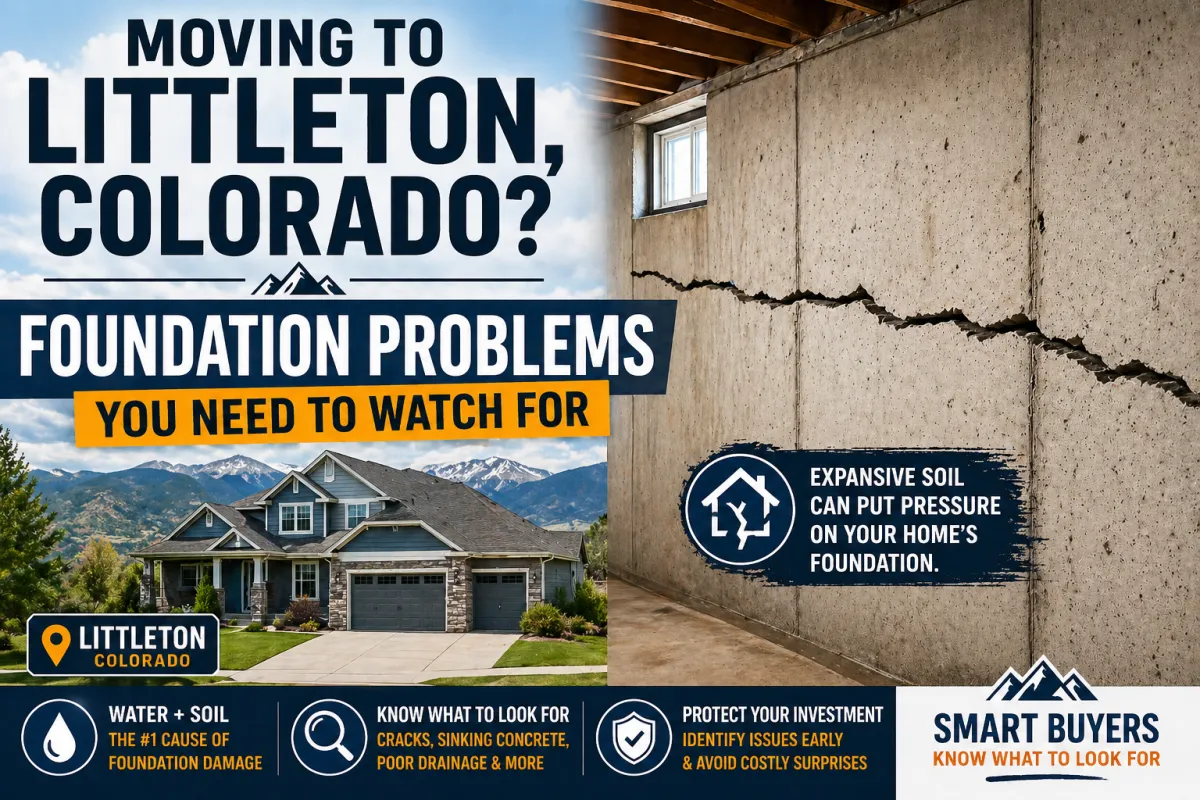
Moving to Littleton, Colorado? Foundation Problems You Need to Watch For
If you’re thinking about buying a home in Littleton, Colorado or anywhere along the Denver Front Range and you’re coming from out of state, there’s something you need to understand right away: the soil here is different, and it affects homes in a big way.
A lot of buyers moving from places like Nebraska, Illinois, or California aren’t used to this. In many parts of the country, soil is stable. In Colorado, especially around Littleton, it’s expansive clay often containing bentonite. That means it absorbs water, expands, and then contracts when it dries out. That constant movement creates pressure on foundations over time.
That’s why you’ll see more structural issues here than in many other markets.
Years ago, we had heavy rains going into a freeze. That combination caused the soil to expand significantly, putting pressure on foundations across the Front Range. Some homes were affected more than others, but it’s something that still shows up today when you’re walking properties.
So what should you actually be looking for?
When you’re in a basement, don’t just glance around—look closely at the foundation walls. Cracks are common, but the type and direction of the crack matter more than the crack itself.
Vertical cracks? Those are often less concerning and can be part of normal settling.
Horizontal cracks? That’s where you need to pay attention.
A horizontal crack usually means pressure from the outside is pushing the wall inward. That’s a structural concern and something that should be evaluated further. It doesn’t automatically mean the deal is dead—but it does mean you need more information.
If you see a long horizontal crack running across a wall, that’s a situation where you bring in a professional. Depending on the severity, solutions could include helical piers, soil anchors, or other structural reinforcements.
Another thing to look at—this one gets overlooked all the time—is drainage.
Where is the water going?
I’ve seen situations where the issue wasn’t complicated at all. Gutters were clogged or downspouts weren’t extended away from the home. Water ran straight down along the foundation, saturated the soil, and over time caused the ground to expand and push against the wall.
You’ll often see this paired with exterior signs—like a front concrete pad or driveway that has sunk or shifted. That’s usually a clue that water and soil movement are involved.
Here’s the step-by-step way to evaluate a home when you’re walking through it:
Start in the basement and scan the foundation walls. Look for crack direction—vertical versus horizontal.
Check for any bowing or inward movement in the walls.
Walk outside and look at grading, gutters, and downspouts. Is water being directed away from the house?
Look at surrounding concrete—has anything settled or tilted?
If anything seems off, get a structural professional involved before moving forward.
One of the biggest mistakes buyers make is either overreacting or underreacting.
Some people see a small crack and immediately walk away from a perfectly good house. Others ignore a clear structural warning sign and end up with a major repair after closing.
You’ve got to find the middle ground—understand what you’re seeing and verify it with the right people.
Another mistake is focusing only on the inside. Foundation problems often start outside. If drainage isn’t handled properly, the issue will continue—even if repairs are made.
From my experience working with buyers, sellers, and investors—and from personally flipping homes—I’ve dealt with a lot of these situations. Some of the properties I’ve purchased had significant foundation issues. The key is understanding what you’re dealing with and knowing how it can be fixed.
Because most of the time, these problems are fixable.
That’s the part a lot of people don’t realize.
A home with foundation issues doesn’t automatically mean it’s a bad investment. In many cases, once it’s properly repaired and the water issue is corrected, that home is solid long-term.
Here’s the bottom line: if you’re buying a home in Littleton or anywhere along the Front Range, you need to pay attention to soil conditions, drainage, and the type of foundation cracks you’re seeing.
Don’t ignore it—but don’t panic either.
Just understand it.
If you’re relocating to Littleton and want help walking properties, evaluating foundation concerns, or just getting a second opinion before you buy, I’m happy to help.
I’m David Novak, a Littleton Realtor with RE/MAX Professionals, known as the Problem Home Solver. If you’re considering buying a home or want help avoiding costly mistakes before you move forward, I’m here as a resource.
👉 Call or text 303-929-9660
👉 Visit ProblemHomeSolver.com

Are you tired of feeling like you can't trust real estate agents?
You’re not alone—and that’s exactly why I do things differently. With 30+ years in real estate, from running a mortgage bank to flipping homes and helping hundreds of families buy and sell, I’ve seen the good, the bad, and the downright ugly. My job isn’t to “sell” you—it’s to guide you with straight answers, real numbers, and options that actually make sense for your situation.
And if you’re not in my area, no problem—I can connect you with a top, experienced agent you can trust in your market.
👉 Fill out the form on my contact page or reach out directly, and let’s talk about how I can help you make the right move without the games.
Facebook
Instagram
X
LinkedIn
Youtube
Website