
Check My Latest Blog Posts
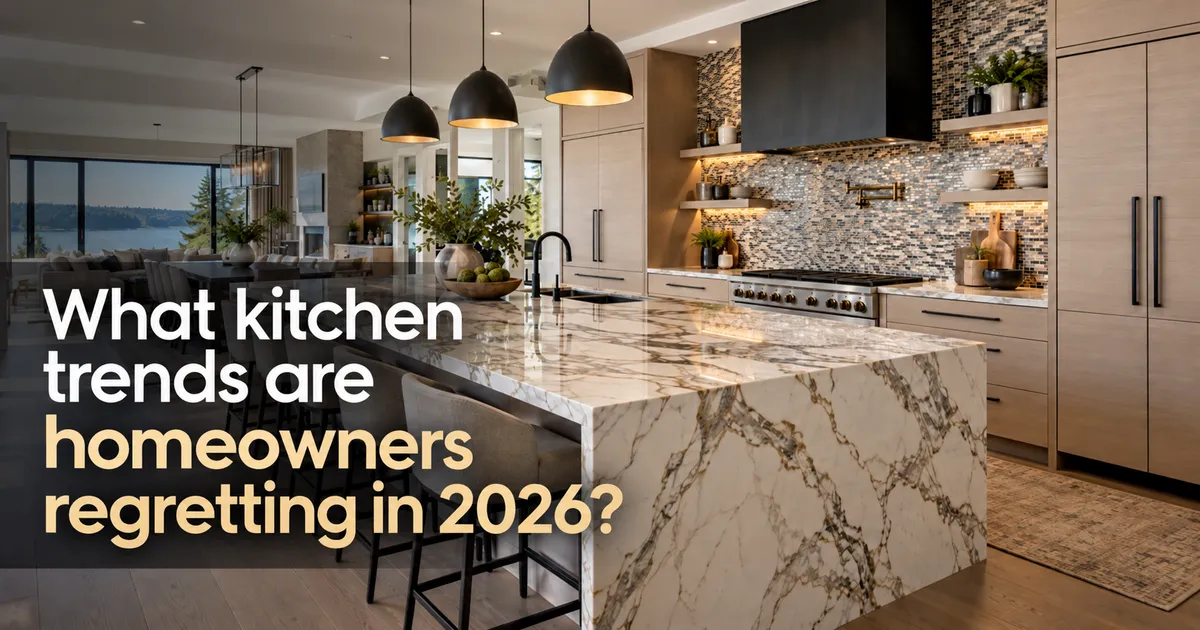
7 Kitchen Design Trends Homeowners Regret and What to Choose Instead
By David Novak | RE/MAX Professionals | Updated October 2026
Remember those expandable kitchen tables we had years ago? When you needed more room, you added a leaf. When you didn't, you made the table smaller.
Simple, practical, and functional.
Now we're seeing kitchen islands so large they dominate the entire room, appliances hidden behind expensive custom panels, and completely open kitchens where there's very little separation from the rest of the house.
Some of these features look incredible in photographs. But living with them can be a different experience.
After nearly 30 years in real estate, including renovating and reselling homes, I've watched kitchen design trends come and go. I've also seen homeowners spend substantial money on features they eventually regret.
The biggest kitchen remodeling mistake isn't necessarily choosing an outdated style. It's spending money on features that don't improve how the kitchen actually functions.
Here are seven kitchen trends I approach cautiously, why they can become frustrating, and what I would consider instead.
1. Pot Fillers: A Luxury Feature You May Rarely Use

Pot fillers have become a recognizable feature in luxury kitchens.
The idea is appealing. Rather than carrying a heavy pot of water from the sink to the stove, you fill it directly above the cooking surface.
But there's one practical detail people sometimes overlook.
You still need to carry that pot of water back to the sink after cooking.
A pot filler also requires additional plumbing, installation costs, and maintenance considerations.
Unlike a kitchen sink, a typical pot filler doesn't have a drain directly below it. That makes proper installation and leak prevention especially important.
I've talked with homeowners who liked the appearance of their pot filler but admitted they rarely used it.
What I recommend instead
Before installing a pot filler, consider whether the money could be better spent on something you'll use every day.
An upgraded kitchen faucet, improved sink, additional storage, or a dedicated prep sink might deliver more practical value.
For someone who regularly cooks large meals, a pot filler may be worthwhile.
But for the average homeowner, I wouldn't consider it a necessary kitchen upgrade, particularly when remodeling for resale.
My recommendation: Prioritize daily functionality over specialty features unless you know you'll use them regularly.
2. Oversized Kitchen Islands: When Bigger Becomes a Problem

Kitchen islands have become larger over the years.
And while I like a well-designed island, I've walked into homes where the island seems to take over the entire kitchen.
There may be plenty of countertop space, but not enough room to comfortably move around.
Sometimes a dishwasher door blocks the walkway when opened. Other times, the island creates awkward access to the refrigerator, oven, or surrounding cabinetry.
I've even seen layouts where replacing a large appliance would be unnecessarily difficult because of the available space.
An oversized island can look impressive while making the kitchen less practical.
How much clearance should a kitchen island have?
Kitchen planning guidelines commonly recommend:
Area | Recommended clearance |
|---|---|
General walkway | At least 36 inches |
Work aisle for one cook | At least 42 inches |
Work aisle for multiple cooks | At least 48 inches |
These are planning recommendations rather than universal building-code minimums. Appliance openings, seating, accessibility, and the overall layout can require additional clearance.
Interior Design U.S.
+1
What I recommend instead
Consider an island sized appropriately for the room rather than choosing the largest one possible.
In certain large kitchens, two smaller islands or separate preparation and seating areas may be more functional.
You also need to consider how people actually use the kitchen.
Can someone open the refrigerator while another person is cooking? Is there enough space to unload the dishwasher? Can multiple people move around comfortably?
Those questions matter more than the island's overall dimensions.
My recommendation: A properly sized kitchen island is generally more useful than an oversized island that restricts movement.
3. Marble Countertops: Beautiful but Demanding

Marble countertops are beautiful.
They have natural character, distinctive veining, and an appearance that many homeowners appreciate.
But marble also requires more attention than some other countertop materials.
Because marble contains calcium carbonate, acidic substances such as lemon juice, vinegar, and certain foods can damage the finish through a process called etching.
Marble can also stain and scratch. Sealing may improve stain resistance, but it doesn't make the surface stain-proof or prevent acid etching. The Natural Stone Institute recommends stone-specific cleaning and maintenance practices.
Natural Stone Institute
For homeowners who appreciate marble's natural aging, those characteristics may not be a problem.
But for someone who wants a low-maintenance kitchen, marble can become frustrating.
What I recommend instead
Engineered quartz with subtle veining can provide a similar appearance with less routine maintenance.
Quartzite is another attractive option for homeowners who prefer natural stone.
However, quartzite isn't maintenance-free. Its porosity and care requirements vary by slab, and homeowners should confirm they're purchasing genuine quartzite rather than a mislabeled material.
Use Natural Stone
My recommendation: Choose marble because you appreciate the material and understand its maintenance, not simply because it looks beautiful in a photograph.
4. Integrated Appliances: A Clean Look With Replacement Challenges

Integrated appliances have become popular in custom kitchen designs.
Refrigerators and dishwashers can be concealed behind cabinetry panels, creating a continuous and coordinated appearance.
It can look fantastic.
The potential problems show up when the appliance needs repairs or replacement.
Panel-ready refrigerators and dishwashers often require specific dimensions, ventilation clearances, and mounting systems.
Replacement options may be more limited than with standard freestanding appliances.
If the new appliance doesn't accommodate the existing custom panel, additional cabinetry modifications may be required.
That can turn what should be a straightforward appliance replacement into a more expensive project.
What I recommend instead
For many kitchens, I prefer quality standard appliances with simple, coordinated finishes.
A counter-depth refrigerator can create a more streamlined appearance without necessarily requiring fully integrated cabinetry.
If you do choose integrated appliances, investigate future replacement options before installation.
My recommendation: Integrated appliances can work beautifully in a custom home, but consider long-term serviceability and replacement costs before committing.
5. Matte Black Hardware: Stylish, but Not Always Easy to Maintain

Matte black hardware has been popular in recent kitchen renovations.
I've used it in my own projects and recommended it for certain homes because it can create attractive contrast against lighter cabinetry.
But some finishes are more demanding than homeowners expect.
Depending on the product's quality and finish, matte black hardware can show fingerprints, mineral deposits, scratches, and wear.
Faucets may be particularly noticeable because of their frequent exposure to water.
Lower-quality finishes may also deteriorate or wear unevenly.
That doesn't make matte black a bad choice. It simply means product quality and maintenance matter.
What I recommend instead
Brushed nickel is one of the alternatives I frequently consider.
It's versatile, works with a variety of cabinetry colors, and can help conceal some everyday fingerprints and water marks.
Bronze finishes or thoughtfully coordinated mixed metals can also work well.
Cabinet hardware is relatively easy to replace compared with countertops or cabinetry, so it's an area where homeowners have some flexibility to experiment.
My recommendation: Choose hardware based on finish durability and how it complements the overall kitchen, rather than selecting it simply because it's popular.
6. Completely Open Kitchens: Less Privacy, More Noise

Open-concept kitchens have been a major part of residential design for years.
There are legitimate advantages.
They can improve sightlines, allow natural light to move between rooms, and make it easier for family members to interact.
But completely removing the separation between the kitchen, dining area, and living room can create new challenges.
Cooking noises travel into the living space.
Televisions and conversations become part of the kitchen environment.
Kitchen clutter remains visible from other rooms, and removing walls can reduce available cabinet and storage space.
For homeowners who work from home, entertain frequently, or prefer quieter spaces, those drawbacks may become noticeable.
What I recommend instead
I often prefer creating defined spaces without completely isolating the kitchen.
That might include widening an existing opening, retaining a partial wall, or incorporating a layout that visually separates the kitchen from the living area.
In older homes, preserving some architectural separation can also help retain the property's original character.
And before removing any walls, it's important to determine whether they're load-bearing and what structural changes, permits, or building-system modifications may be necessary.
My recommendation: Focus on good circulation, natural light, storage, and practical separation rather than assuming every wall needs to disappear.
7. Glass Mosaic Backsplashes: A Trend That Can Date a Kitchen

Glass mosaic backsplashes were extremely popular in many kitchens during the 2000s and 2010s.
You probably remember the narrow glass tiles, mixed colors, metallic accents, and busy patterns.
At the time, they helped kitchens feel updated.
Today, some of those highly recognizable designs can make a kitchen look older, particularly when combined with cabinetry and countertops from the same era.
It's not that glass tile itself is necessarily outdated.
The concern is how strongly certain colors and patterns are associated with a particular design period.
Busy backsplashes can also compete with countertop patterns and cabinetry details.
What I recommend instead
Simple subway tile remains one of my preferred backsplash options.
It's available in numerous colors, sizes, and finishes and works with both traditional and contemporary kitchens.
Another attractive option is a slab backsplash that extends the countertop material vertically up the wall.
That creates a cleaner appearance with fewer grout joints.
My recommendation: If resale is part of the plan, consider simpler backsplash materials that complement the rest of the kitchen without dominating the design.
Kitchen Renovation Trends vs. Resale Value: What Matters Most?
One thing I want to make clear is that there's a difference between renovating for your own enjoyment and renovating to sell.
If you plan to stay in your home for another 15 or 20 years, your personal preferences should matter.
Love marble? Install marble.
Want a pot filler because you cook pasta every night? It might be a great addition.
Prefer a completely open kitchen? That's your decision.
But if you're planning to sell in the next year or two, the financial considerations are different.
The National Association of Realtors and National Association of the Remodeling Industry's 2025 Remodeling Impact Report found that kitchen upgrades received a perfect homeowner satisfaction score of 10. However, the report estimated only about 60% cost recovery for both minor kitchen upgrades and complete kitchen renovations at resale.
+1
That doesn't mean every kitchen project recovers exactly 60%, but it illustrates an important distinction.
An improvement that makes you happier in your home doesn't automatically generate an equivalent increase in resale value.
The cost, condition of the existing kitchen, neighborhood expectations, and local market all need to be considered.
Which Kitchen Features Are Worth Prioritizing?
If you're renovating and want a kitchen that remains functional and appealing over time, I generally recommend concentrating on the basics.
Kitchen feature | What I would prioritize |
|---|---|
Layout | Comfortable movement and efficient work areas |
Island | Appropriate size and sufficient clearance |
Countertops | Durable materials suited to the household |
Appliances | Reliability, practical dimensions, and replacement options |
Cabinets | Useful storage and good-quality construction |
Hardware | Durable finishes and comfortable operation |
Backsplash | Easy cleaning and a design that complements the kitchen |
Lighting | Adequate task lighting and comfortable general illumination |
None of these improvements needs to be especially trendy or expensive.
A functional kitchen with good lighting, appropriate storage, and durable materials may be a better long-term investment than one filled with expensive specialty features.
Should You Remodel Your Kitchen Before Selling?
Not necessarily.
This is one of the most common conversations I have with homeowners preparing to list their properties.
They assume that replacing cabinets, countertops, appliances, and flooring will automatically increase their sale price enough to justify the expense.
Sometimes those improvements are worthwhile.
But other times, the homeowner may be better off completing smaller projects.
Fresh paint, improved lighting, cabinet hardware, professional cleaning, and minor repairs may significantly improve the kitchen's presentation without requiring a major renovation.
Before investing in a large project, consider:
How does the existing kitchen compare with recently sold homes in the neighborhood?
Are the cabinets and countertops functional, or are they genuinely deteriorating?
What will the entire project cost, including labor and unexpected expenses?
How long do you plan to remain in the property?
Is the goal personal enjoyment, increased resale value, or both?
For a homeowner planning to sell soon, I would evaluate the likely net proceeds before recommending a complete kitchen renovation.
Final Thoughts: The Best Kitchens Aren't Always the Trendiest
After years of renovating properties and helping homeowners prepare their houses for sale, I've learned that expensive doesn't always mean better.
A kitchen can have beautiful marble, custom appliances, and an enormous island and still be frustrating to use.
On the other hand, a relatively simple kitchen with a thoughtful layout, good storage, and durable materials can remain attractive and practical for years.
Trends will continue to change.
What looks fashionable in 2026 may look entirely different in another decade.
That's why I encourage homeowners to think carefully about function, maintenance, and the cost of improvements rather than following every new design trend.
And if you're planning to sell, make sure those improvements align with the property's market value.
The best remodeling decisions are the ones that make sense for your home, your budget, and your plans.
Questions About Kitchen Improvements or Selling Your Home?
I'm David Novak, a Littleton Realtor with RE/MAX Professionals, known as the Problem Home Solver.
I've spent nearly 30 years in real estate, including mortgage banking, residential investment properties, and renovating homes for resale.
If you're considering a kitchen renovation and aren't sure which improvements make financial sense, I'm happy to help you evaluate your options.
Whether you're updating an older home, preparing a property for sale, or deciding whether to renovate at all, understanding your numbers is an important place to start.
Call or text: 303-929-9660Website: ProblemHomeSolver.com
Serving Littleton, Highlands Ranch, and surrounding Denver metro communities.
Watch the Video: Kitchen Design Trends Homeowners Regret
Watch my complete discussion of these seven kitchen features, including what I've observed in renovation projects and homes I've helped clients buy and sell.
Watch 7 Kitchen Design Trends Homeowners Regret
Frequently Asked Questions
What kitchen trends are homeowners regretting in 2026?
Some homeowners find that oversized islands, high-maintenance marble countertops, specialty pot fillers, and fully integrated appliances don't suit their everyday needs. These features aren't inherently bad, but their practicality depends on the household and kitchen layout.
Are open-concept kitchens going out of style?
Open-concept kitchens remain a valid design choice, but some homeowners prefer more separation for noise control, privacy, and storage. A partially open layout can provide a balance between connectivity and defined living spaces.
Do pot fillers add resale value?
There isn't strong evidence that installing a pot filler consistently increases resale value enough to cover its cost. It may appeal to particular buyers, especially in high-end kitchens, but it's generally best considered a lifestyle feature.
Are marble countertops worth the money?
Marble can be a good choice for homeowners who appreciate natural stone and accept its maintenance requirements. For those seeking a lower-maintenance surface, engineered quartz may be more practical.
What kitchen upgrades help when selling a home?
Improvements that address worn surfaces, poor lighting, damaged finishes, and functionality can help a kitchen compete with similar properties. The appropriate improvements depend on the home's condition, price range, and neighborhood.
Should I renovate my entire kitchen before selling?
Not automatically. A complete renovation can be expensive, and homeowners may not recover the full cost. A comparative market analysis and realistic renovation budget can help determine whether smaller improvements or selling in the existing condition makes more sense.

Are you tired of feeling like you can't trust real estate agents?
You’re not alone—and that’s exactly why I do things differently. With 30+ years in real estate, from running a mortgage bank to flipping homes and helping hundreds of families buy and sell, I’ve seen the good, the bad, and the downright ugly. My job isn’t to “sell” you—it’s to guide you with straight answers, real numbers, and options that actually make sense for your situation.
And if you’re not in my area, no problem—I can connect you with a top, experienced agent you can trust in your market.
👉 Fill out the form on my contact page or reach out directly, and let’s talk about how I can help you make the right move without the games.
Facebook
Instagram
X
LinkedIn
Youtube
Website